Why This Keyword Matters in B2B Search
The keyword camping bag fabricator reflects a commercial sourcing problem, not just a content topic. Brands, importers, distributors, and procurement teams often use this type of phrase when they are comparing factories, evaluating custom capability, or searching for a partner that can support product differentiation at scale. Searchers using terms like this usually want useful detail, manufacturing credibility, and a clear next step.
For SEO performance, the page match matters. A keyword like this should lead readers to a destination that actually discusses the same product family, sourcing model, or customization process. Weierken's category and manufacturing pages are built around that logic, which helps keep the article relevant, commercially coherent, and more useful to serious buyers.
In practical sourcing work, this keyword points to outdoor brands and wholesale buyers searching for durable hiking or camping bag development. That means the reader is likely comparing suppliers, checking category fit, or evaluating whether a partner can support branding, compliance, and production at the same time. For that reason, content built around camping bag fabricator should be written as a buyer guide rather than a thin promotional paragraph.
How This Topic Connects to Weierken
Weierken presents itself as a factory-backed bag manufacturer founded in 2006, with three self-owned factories across China and Cambodia, 80,000+ square meters of production space, 3000+ workers, and support for OEM, ODM, and full customization. Across the site, the company references BSCI, SEDEX, REACH, GRS, ISO9001, NOA, and other compliance-related signals. Its factory pages also describe practical tests such as zipper fatigue testing, tensile testing, vibration testing, color fastness inspection, and high-frequency sealing processes.
Those details matter because they help establish real-world credibility. Google increasingly rewards content that demonstrates useful expertise, trust signals, and a clear understanding of the user's problem. In this niche, readers want to know who is making the bags, how production is controlled, what kind of certifications are available, and whether the supplier can support long-term commercial growth instead of just shipping one order.
For this reason, the most relevant destination for this keyword is the Hiking Bags page on Weierken. It provides a closer match between keyword intent and landing-page subject, which is one of the core principles behind stronger SEO relevance and better conversion quality.
What Buyers Usually Need from This Product Category
Although the exact specification varies by project, the buying logic stays relatively consistent. Professional buyers want a bag that can hold up under repeated use, support a specific carrying or insulation function, match brand positioning, and remain commercially viable in bulk production. In other words, they are not only buying a bag. They are buying a product system that must work in the field, on shelves, or inside a distribution workflow.
That is where category knowledge becomes important. A supplier should understand not only the bag silhouette, but also closure systems, liner options, outer-shell durability, branding methods, accessory layout, and the relationship between product performance and unit cost. Weak supplier knowledge often produces attractive samples that fail during actual use, while stronger supplier knowledge creates better long-term SKU performance.
- lightweight outdoor durability
- multi-compartment and trail-ready design
- eco-friendly material options for branded programs
Materials, Construction, and Functional Design
Material choice is one of the first places where sourcing quality becomes visible. According to Weierken's customization materials guidance, the factory can work with different material systems depending on the bag type and use environment. The specific combination should be selected according to insulation performance, waterproof level, abrasion resistance, cost target, and branding expectations.
- nylon
- Cordura
- RPET
- PU coating
- TPU coating
Material selection should never happen in isolation. For example, a bag intended for temperature-sensitive transport may need an insulation-oriented structure, whereas a bag intended for wet or rough outdoor conditions may prioritize coated fabrics, sealed seams, and waterproof zipper options. A lifestyle tote or beach-oriented product may place more emphasis on brand presentation, handle comfort, retail appearance, and eco-friendly story. The point is that the right construction starts with the commercial use case, not with a one-size-fits-all sample.
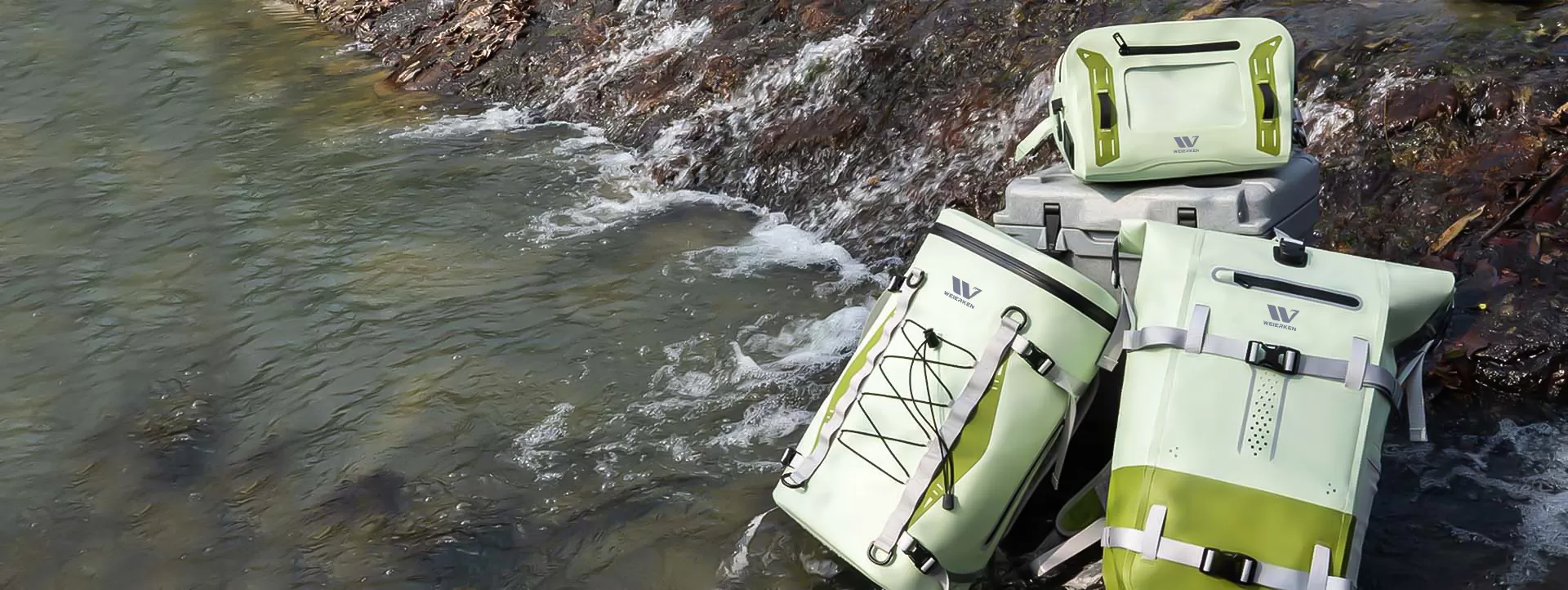
The hiking category highlights waterproof materials, abrasion resistance, accessory customization, and responsible sourcing for outdoor bags built for real trail and travel demands.
Weierken's customization pages also show that product development extends beyond outer fabric. Zippers, straps, compartments, pockets, windows, logo applications, and packaging all affect how the finished bag performs in the market. This kind of component-level flexibility is especially important for SEO-targeted commercial keywords, because users entering those queries are often already thinking about specification differences, not just browsing images.
Manufacturing Depth, OEM, ODM, and Scale-Up Readiness
One of the strongest commercial themes on Weierken's website is its manufacturing depth. The OEM, ODM, customization, and factory pages collectively describe a workflow that starts with requirement communication and continues through design, sampling, production, testing, packaging, and after-sales support. This matters because many procurement problems happen in the gap between concept and scale. A supplier may promise customization, but without organized execution, the project becomes slow, inconsistent, or difficult to revise.
According to the OEM and ODM pages, Weierken supports both ready-to-customize product programs and more tailored development routes. The OEM process references stages such as inquiry reception, preliminary design and proposal, sample production, confirmation, contract signing, quality control, testing, and packaging. The ODM content adds market analysis, product optimization, and easier path-to-launch advantages. For buyers, that means the factory is positioning itself as a manufacturing partner rather than a simple reseller.
This distinction is critical for Google-aligned content because useful SEO content should answer the real sourcing questions behind the keyword. If a reader is searching a phrase with supplier or factory intent, they want operational answers: how the development cycle works, how quickly samples can move, whether the factory can manage volume, and whether quality systems are visible. Content that addresses these points is far more helpful than content that only repeats the target phrase.
Quality Control, Compliance, and Risk Reduction
Quality control is often the deciding factor in long-term supplier relationships. Low-cost sourcing may look attractive early in the process, but inconsistent stitching, weak zippers, poor sealing, low-grade lining, color mismatch, or unstable load-bearing performance can damage customer trust very quickly. That is why buyers using factory-oriented keywords often audit the supplier's testing discipline as closely as they audit the catalog itself.
Weierken's manufacturing page highlights several useful control points: manual fabric inspection, cutting, semi-automated production, final inspection and packaging, plus machine-supported checks such as zipper fatigue testing, tensile testing, vibration testing, and color fastness evaluation. These details matter because they show that quality is treated as a process, not just as a final inspection label. For many B2B buyers, that process visibility reduces risk when approving a vendor for repeat production.
Outdoor buyers need a supplier that understands carrying comfort, weather resistance, and product durability, because these factors directly shape user reviews and repeat orders.
Compliance-related language on the site also matters for SEO and conversion. References to BSCI, ISO, REACH, GRS, SEDEX, organic materials, and safety-oriented testing help support trust, especially when the buyer is sourcing for international markets, regulated retail channels, or brand-sensitive programs. While each buyer still needs to confirm exact document scope, the presence of these compliance signals strengthens topical relevance and purchase confidence.
Use Cases and Commercial Fit
Search intent becomes clearer when the end use is defined. The same keyword can carry different commercial meanings depending on who is searching and how the bag will be sold or used. Some buyers are building a private label collection. Others are sourcing for cold-chain logistics, food delivery, outdoor retail, water-sports, promotions, or a new branded product test. A useful article should acknowledge that range and connect the keyword to realistic deployment scenarios.
- camping and trekking collections
- all-weather outdoor backpack lines
- multi-day adventure and travel assortments
When the application is clearly understood, the supplier can make better recommendations around materials, closure systems, accessory layout, reinforcement points, packaging, and MOQ strategy. This leads to more accurate quotations and fewer late-stage changes. In SEO terms, it also makes the content more satisfying to the reader because it mirrors the kinds of decisions an actual buyer must make before placing an order.
How to Evaluate a Supplier for This Keyword
Professional buyers rarely stop at one sample photo or one low quote. They ask whether the supplier can maintain consistency from sample approval to mass production, whether the chosen materials truly fit the use case, and whether the manufacturing line can preserve quality once volume scales. Those questions are especially important when the keyword has a strong factory, plant, fabricator, supplier, or vendor intent.
- fabric performance under abrasion and moisture
- comfort system design such as straps and support points
- customization range for accessories and branding
Buyers should also ask for relevant examples, sample review checkpoints, production photos or videos, packaging options, and lead-time assumptions for both pilot and repeat orders. It is helpful to compare how quickly a supplier can move from inquiry to sampling, how clearly revisions are documented, and how transparent the factory is when discussing materials, tolerances, and testing. These process details often separate dependable partners from opportunistic traders.
For manufacturing-intent keywords in particular, the most useful landing page is not always a generic homepage. It is the page that best matches the product family or service model behind the phrase. That is why this article links directly to camping bag fabricator in context. The goal is not to force a link; the goal is to let the reader continue their evaluation on the page that answers the next logical question.
FAQ for Buyers
Is this keyword better matched to a factory page or a category page?
That depends on the phrase. If the keyword is strongly product-specific, the best match is often the relevant category page. If the query is more focused on OEM, ODM, plant capability, or approved vendor screening, a manufacturing or service page can be more appropriate. For this article, the chosen target page is the most relevant continuation of the search intent.
Can Weierken support custom development rather than only standard models?
Yes. Based on its OEM, ODM, and customization pages, Weierken supports product development through material choice, logo application, accessory adjustments, packaging, and other specification-level changes. Buyers should still confirm exact project scope, MOQ, and sampling conditions during inquiry.
Why does long-form content help this keyword perform better?
Because the user intent is commercial and technical at the same time. A short paragraph rarely answers the real questions behind the search. Longer, buyer-focused content can cover product fit, manufacturing, quality control, supplier evaluation, and next-step guidance, which makes it more useful for both users and search engines.
What should a buyer do after reading this article?
The next step is to review the linked Weierken page, compare the product or service fit against your sourcing needs, and send your project details for discussion. Helpful SEO content should make that step feel natural, not forced.
Conclusion
Useful SEO content should help readers move from keyword interest to an informed next action. In this case, the logical next action is reviewing the relevant Weierken page, checking the bag category or manufacturing service in context, and sending project details for quotation, development, or sampling. That is why the internal link placement in this article is intentional rather than decorative.
In summary, camping bag fabricator is best treated as a real B2B sourcing topic with product, factory, and commercialization layers. The strongest content for this kind of query must match search intent, explain the buying logic, show evidence of manufacturing understanding, and send the reader to the right page on the destination site. That is the approach most aligned with modern Google SEO best practices: helpful, specific, relevant, and written for real decision-making rather than keyword stuffing.